Silence, Please — and Mean It: How One Primary Made Quiet a Pastoral Priority
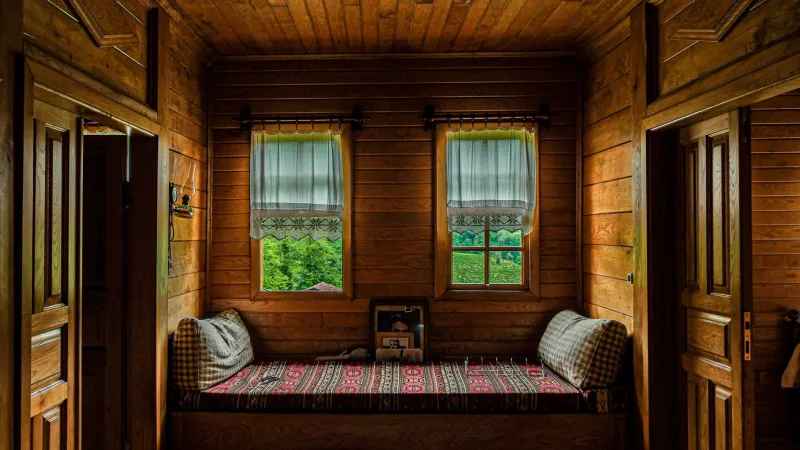
On a wet Tuesday in November, the most popular room at a primary school in West Yorkshire has no interactive whiteboard, no display boards and no chairs arranged in a horseshoe. It has a bench, a curtain and a small window that looks out at a sycamore. It also has a rule that surprises visitors: nobody has to say anything.
The store cupboard that stopped being a store cupboard
Three years ago, the space was a storeroom. Stackable chairs lived there, along with a broken laminator, several tubs of glitter and a smell of old carpet. A teaching assistant noticed that children were finding quiet corners of their own — behind the coat pegs, at the end of the library shelf, under the stairs by the fire door. Not because they were in trouble. Mostly because the day was loud and they needed a minute.
The school had no spare budget for a wellbeing suite. It did have a spare room and a headteacher willing to try something small. Staff cleared the chairs, painted the walls a soft green and hung a thick curtain across the doorway instead of fitting a door. The bench came from the staff room. A cushion came from home. A sand timer appeared on the windowsill, not to hurry anyone along but to offer a shape to the time.
It opened quietly in the spring of 2024. There was no ribbon, no press release and no assembly announcement. The school simply put a small sign by the curtain: The Quiet Room. Open at break and lunch. You can come in. You can leave. You do not have to explain.
How children actually use it
The room holds two or three children at a time. There is no booking system and no referral form. A pupil can ask a member of staff if they can go, or a teacher can suggest it. The curtain is the important bit. It is a door you can slip through without knocking, and a door you can leave through without asking permission. For a child who is used to putting their hand up for everything, that small act of choice seems to matter.
On the day I visit, a Year 2 boy sits on the bench with his shoes just touching the floor, watching the sycamore. He comes because his grandma is poorly and the classroom feels too busy to think about it. A Year 5 girl comes because her friendship group has been noisy all week and she wants ten minutes where nobody needs a answer from her. Another child comes simply because they like the window. None of them are made to talk about it afterwards.
The sand timer is optional. So is the cushion. There are no screens, no headphones and no guided meditation app. The school is not against those things; it just wanted a room that asks nothing and offers nothing to achieve. Quiet, it turns out, is easier to find when nobody is trying to sell it to you.
The fight to keep it empty
The hardest part has not been creating the room. It has been protecting it. Within weeks, staff saw other uses. Could it host one-to-one reading? Could it be used for a small group intervention? Could the SENCO borrow it for a meeting? Could it become a reward for good behaviour, or a sanction for poor behaviour? Every suggestion was reasonable. Every suggestion would have changed the room into something else.
The headteacher and the pastoral team agreed on a small set of rules. The room is not on the timetable. It is not part of a programme. It is not tracked, scored or reported on. It does not appear in a data dashboard. Three members of staff share the job of holding the space, which mostly means being nearby, not hovering. If a child needs more than the room can offer, the school says clearly, they get more — counselling, pastoral support, outside agencies. The quiet room is not a replacement for any of that. It is simply a place to start.
One teaching assistant puts it neatly: 'The moment you timetable a quiet room, it stops being quiet. It becomes another thing to get through.'
Why quiet is pastoral care
In 2026, the language around children's wellbeing is often clinical, urgent and full of targets. Schools are asked to measure, monitor and evidence. Much of that is necessary. But there is also a quieter truth: some children need unclaimed time. Not a club, not a lesson, not a reward chart. Just a bench and a window and the chance to hear themselves think.
The room has a gentle echo of the Mary Ward tradition, too — the belief that children are not problems to be managed but people to be known. Mary Ward Loreto's own story is rooted in attending to the whole person, and this small space feels like a practical version of that instinct. It is not a chapel and it is not a counselling session. It is a curtain, a bench and ten minutes of nothing much. Sometimes that is enough to help a child come back to the classroom a little more themselves.
The soft door
At the end of the day, the room is just a converted store cupboard. The paint is not perfect. The bench wobbles slightly. The curtain is not fire-rated to anyone's idea of glamour. But children ask for it. They ask in the way children ask for things that matter: quietly, sideways, testing whether the offer is real.
One pupil told staff it is 'like the quiet after the rain'. Another said, 'You can hear yourself think.' The school has not turned those lines into a poster. They are just the sort of thing you hear when a room is doing its job.
In a school year that is packed tight with phonics, fractions, assessments and Christmas rehearsals, the quiet room asks for nothing. It does not need a scheme of work. It does not need a progress measure. It only needs to be kept open, kept empty and kept soft at the door. In 2026, that feels less like a luxury and more like a form of pastoral care we should all be paying attention to.