The Cupboard That Sang: How a Village Primary Found Its Voice Again
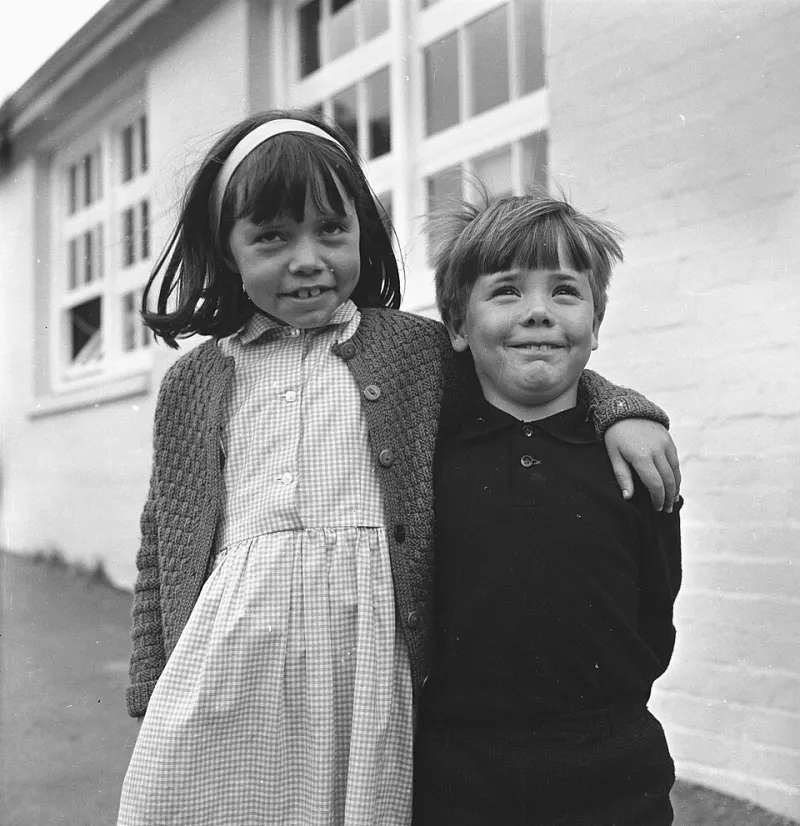
Photo: Geoff Charles, CC BY-SA 4.0, via Wikimedia Commons
On a wet Tuesday in October, the hall at a village primary on the edge of the Pennines smelled of floor polish and damp coats. The piano had been wheeled out of the corner, which was unusual enough to make Year 4 whisper. A box of hymn books sat on a chair, its corners soft with age. Nobody had asked the children to audition. Nobody had printed a programme. The deputy head simply said, ‘We are going to sing for a bit,’ and opened the first book.
That is how the quiet return of school singing is happening in many places in 2026 — not with a grand concert or a new initiative, but with a cupboard being opened and a few familiar tunes being tried out. In a year when so much of school life arrives through a screen, the simple act of singing together has started to feel less like a subject and more like a small act of repair.
The cupboard by the piano
The school had not planned a revival. A clear-out before half term had turned up a stack of hymn books from the 1980s and a folder of handwritten songs, the kind once copied out for assemblies and harvest festivals. The head teacher nearly put them in the recycling. Then a teaching assistant said, ‘My gran used to sing that one,’ and the box stayed.
The first session lasted fifteen minutes. No register, no marking, no expectation. The children stood in loose rows. Some knew the tunes from Christmas services. Others knew nothing at all. But by the second verse, the hall had changed. The sound was not polished. It was something better: a room full of people breathing at the same time.
Fifteen minutes, no audition
What makes the return notable is how unremarkable it is. There is no choir club after school, no competition entry, no push for a recording. The sessions are short and repeated, often on a Tuesday or a Thursday morning. Teachers say the timing matters. A fifteen-minute sing sits before maths, not after it. It does not compete with lunch or break. It does not ask children to be good at anything.
One boy in Year 5, who usually finds transitions difficult, now asks on Monday whether it is a singing day. A girl in Year 3 told her teacher that the songs make her feel ‘like the hall is holding everyone’. Staff have noticed that the walk back to class is calmer. None of this is measurable in the usual way, which may be why it feels so valuable.
The songs that were already there
The repertoire is a mix. There are old hymns — ‘Morning Has Broken’, ‘All Things Bright and Beautiful’, ‘Jerusalem’ — and there are playground rhymes that have survived without anyone teaching them properly. There is also a song about the village bus that a parent wrote years ago and nobody can quite remember the second verse of. The children sing it anyway, filling the gaps with humming.
This is not a church service. It is not designed to be. The hymns are treated as heritage as much as devotion — words that grandparents know, that sit in the memory even when the faith behind them is not fully understood. For a school with a quiet church connection, that feels honest. The songs carry history. The children carry them forward without being asked to explain what they believe.
A verse for the village
In November, the school added a new verse to the bus song. It mentions the shop, the war memorial and the tree by the gate that loses its leaves all at once. A grandparent came in to teach it. She stood at the front with the words on a piece of card and said, ‘We used to sing this when I was your age.’ The children listened. Then they sang it back to her.
That moment — old voice, young voices, same tune — is the heart of the story. It is the sort of quiet, local moment that sits close to the Mary Ward Loreto idea of education forming the whole person, not just the timetable. There is no certificate for it. There is just a hall, a piano and a song that belongs to a place.
What singing does that a screen cannot
Teachers are careful not to overclaim. Singing is not a cure for everything. Some children still find it awkward. Some stand at the back and mouth the words. But the staff have noticed small things: children who rarely speak in class joining in on the chorus; a child with anxiety saying the singing helps her breathing; a parent saying her son now sings in the car.
The shared rhythm does something that a screen cannot. It asks for presence, not performance. It makes a room feel like a room full of people rather than a room full of separate tasks. In a school day broken into small, measured pieces, that is unusual. It is also, several teachers said, a relief.
The door stays open
The hymn books have not gone back in the cupboard. They live on a shelf by the piano now, within reach. The school has no plan to make singing compulsory or to turn it into a showcase. The hope is simpler: that the sessions keep happening, that grandparents keep being invited, and that the children keep knowing the songs without quite remembering how they learned them.
On the Tuesday before Remembrance, the hall sang ‘O God, Our Help in Ages Past’. The piano was slightly out of tune. A reception child hummed the last line a beat behind everyone else. Nobody minded. The bell went. The children filed out. And the song stayed in the room a little longer than the timetable expected.