Written in Gravy and Grammar: The School Cookbook Where Family Suppers Refuse to Be Forgotten
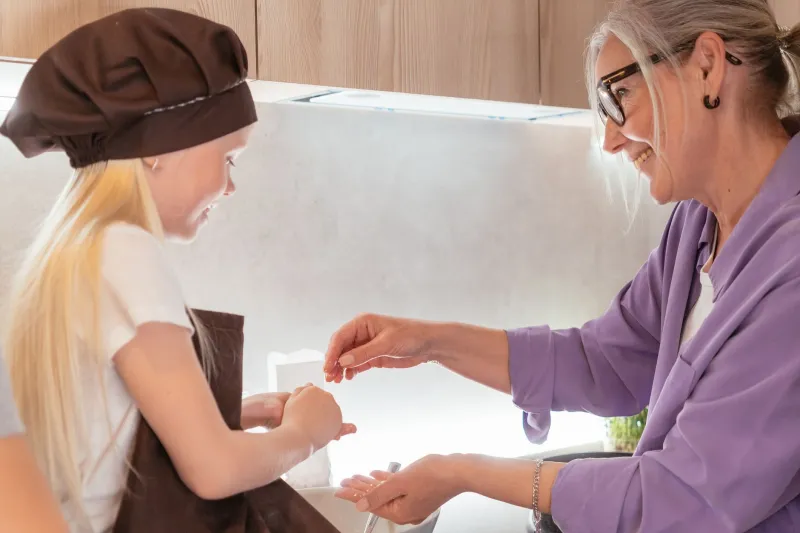
It is ten past two on a wet Tuesday in November, and the Year 4 classroom smells faintly of cardamom and onions. Three grandmothers are seated at a table built for eight-year-olds, knees up near their chins, and none of them seems to mind in the slightest. Beside each one sits a child with a chewed pencil and a twenty-pence exercise book from the shop on the corner.
They are not doing maths. They are writing down dinner.
This is the second year of the school's community cookbook, and if you came expecting a glossy hardback with styled photographs of pomegranate seeds, you would be disappointed. What exists instead is a cardboard box of forty-one exercise books, each one covered in a name written in biro, each one holding a family recipe as told by the person who actually makes it.
The book that smells of someone's kitchen
The idea started small, as these things usually do. A teacher wanted a way to get children writing for a real audience — not a worksheet, not a comprehension exercise, but something another human being would genuinely want to read. A recipe, she reasoned, has instructions, measurements, sequence and memory all built in. It also has a person behind it.
So the letter went home in September: send in a dish your family cooks, and come and tell us about it if you can. The response was not tidy. It arrived in layers.
One boy dictated his nan's cheese and onion pie, including the line "you have to let it go cold or it falls apart, that's the whole secret", which the teacher left exactly as it was. A girl in Year 5 wrote out her mother's jollof rice and then added a second page of notes in tiny handwriting about which aunt argues with which about the correct way to do it. A Ukrainian family submitted borscht with a note explaining that in their house it is made with beans, and that this is not up for debate.
There is a soup from a family who arrived from Hong Kong in 2022, a Polish apple cake that appears whenever someone has a birthday, a Lenten chickpea stew, a halal chicken biryani, and — a personal favourite of the school office — a recipe simply titled "Dad's Thursday", which turns out to be sausages, mash and the same gravy he has made every Thursday for fourteen years.
Why exercise books beat the fancy binder
There was a brief conversation in the staffroom about doing it properly: laminated pages, a spiral binding, maybe a small charge to cover costs. It was quietly dropped.
Exercise books won for three reasons. They are cheap enough that no family has to think twice. They are forgiving — a page can be crossed out, scribbled over, returned to a fortnight later. And they look like school, which somehow makes them easier to fill in. A grandmother who would never describe herself as a writer will happily write in a school book while her grandson watches.
The books stay in the school. Families can borrow them, photograph them, take them home for a weekend, but they come back. The plan, eventually, is a single photocopied collection for the school library, with a second copy kept in the office safe from spills.
The awkward bits nobody warns you about
Anyone thinking of doing this needs to hear the boring parts too, because they are what make it work.
Allergies come first. Every recipe is checked by staff before it goes in the box, and a red sticker goes on any book containing nuts, sesame or shellfish. The school does not cook from the books for whole classes and does not run tasting sessions without a full allergen check and parental consent — the cookbook is a writing and heritage project, not a catering operation. That distinction saves a lot of grief.
Privacy matters just as much. Some families are newly arrived and do not want their names, addresses or countries of origin written down in something that might get photographed. Some do. So the consent form is specific: use my name, or use my first name only, or write "a family in Year 3". Children choose the wording themselves, which teaches them something a worksheet never will.
And there is the quieter question of who owns a recipe. A dish that has been in a family for three generations is not really anyone's property, but it is somebody's memory. The rule here is simple: if a family says a recipe is private, it comes out of the book, no discussion, no hard feelings.
If your school fancies having a go
It is, genuinely, a project you can start with almost nothing.
- Start with one class, not the whole school. Forty books is plenty for a first year. You can always expand.
- Send the letter in the autumn term. Families are settling in, grandparents are visiting, and nobody is yet panicking about SATs.
- Ask for the story, not just the ingredients. The line "my mum makes this when someone is ill" is worth more than a list of grams.
- Let the awkward handwriting stand. Corrections flatten the voice.
- Invite people in. A chair, a cup of tea and an hour after school will bring in recipes that no letter ever could.
- Keep the originals. Scan them. Back them up somewhere sensible.
- Sort the consent and allergen paperwork before the first session, not after. It is dull, and it is the reason the project survives.
What the box actually holds
At the end of the afternoon, a grandmother named Halina finishes her page, closes the book and taps it twice with a flat palm, the way you might pat a dog. Her granddaughter reads it back to her, slowly, in English, getting a word wrong and being corrected.
It is not a meal. Nobody eats anything. But it is, in its small way, a record — of what people cook when nobody is watching, of which dishes crossed a border in a suitcase, of what children will remember when the people who made it are no longer at the table.
Schools keep registers, attendance figures and reports. This one also keeps a cardboard box of exercise books that smell of other people's kitchens. In fifty years, when someone asks what this street ate in 2026, the answer may well be in there, in biro, spelled three different ways.