The Peg With Her Name On It: What It Actually Takes to Join a School in November
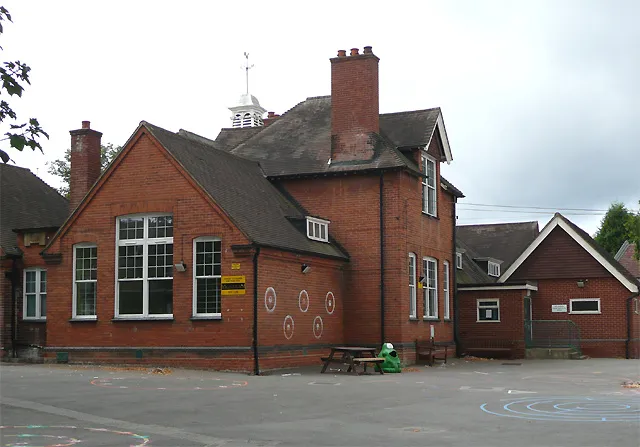
Photo: Roger Kidd, CC BY-SA 2.0, via Wikimedia Commons
The letter goes out on a Friday. It is a single side of A4, printed on headed paper, and it is addressed not to a parent but to a child.
It says: your peg is the third one along on the left, under the window. It says: your buddy is called Isla and she will be on the gate at ten to nine, and she is nervous too, which she has given permission for us to tell you. It says: you do not need to bring a pencil case on the first day, we have one, and it is navy, and if navy is the wrong colour for you then tell us and it can be a different colour.
At a two-form entry primary on the edge of a West Yorkshire mill town, this letter is the first thing that happens when a child joins in November. Not the paperwork. Not the admissions code. The letter.
The dark end of the year
September arrivals are easy to plan for, because they arrive together. Thirty of them, in shiny shoes, all slightly lost, all held together by a timetable built for exactly that. Nobody notices who is new, because everyone is.
November is different. By bonfire night the corridors have settled. The cloakroom pegs have a system, deeply understood by the children, impenetrable to adults. The class has a seating plan that has stopped shifting. Somebody has already been given the job of handing out the whiteboard pens and will not be giving it up.
A child arriving now does not slot into a beginning. They arrive in the middle of something, and the something keeps going while they stand there.
It was the deputy head, a woman called Frances who has done this job for nineteen years, who put it best. "In September we build a class," she said, standing in the entrance hall while a Year 4 filed past in wellies. "In November we have to make a space in one. Those are different skills and nobody writes them down anywhere."
What a prepared welcome looks like
The week we visited, the school was waiting for a girl in Year 3. She was moving from a different part of the country, and the arrival was known about three weeks in advance, which Frances describes as "an absolute luxury. Sometimes we get a phone call on Monday morning and a child on Tuesday."
What the three weeks bought is not complicated. It is almost embarrassingly simple.
A peg with a name. The laminated label was made on the Tuesday, a fortnight early, so the name would already be familiar — spelled properly, checked twice, done in the same font as everyone else's. "If a child's peg looks temporary, the child feels temporary," Frances said.
A seat that stays put. The class teacher moved two children rather than one, creating a pair of free seats at the front, then filled one of them a week early with a child who needed a change anyway. The new arrival will sit next to a person, not next to a gap.
A buddy with a packed lunch. Isla, Year 3, is on packed lunches every day. That was deliberate. Dinner hall queues, PIN numbers and the daily choice between pasta and jacket potato are the sort of small administrative frictions that can tip a wobbly first week, so the school matches new children with someone whose lunch routine is identical and immediate.
Two of everything. A spare water bottle, a spare jumper in the office cupboard, a spare reading book at the right level, kept at the right level, so no one has to be assessed before they can be comfortable.
A fact sheet written by a child. Year 6 produce these for new arrivals — one page, felt tips, entirely unofficial. Ours included the information that the left-hand stairs are the fast stairs, that the year group's favourite author is currently Onjali Rauf, and that the water fountain by the art room is broken and will probably never be fixed. It is the most useful document in the building.
The uniform rail and the small arithmetic of belonging
The office keeps a rail in the corridor by the photocopier. Coats, jumpers, a few pairs of trousers, a box of plimsolls. Nothing about it is transactable: it is not a shop and there is no acknowledgment expected, no list on the wall. It exists because school uniform is a cost, and because a child in the wrong shade of grey will spend a fortnight being looked at rather than being met.
"You notice it most in November," said Frances. "Nobody's been shopping in the holidays. If things are going to be tight, this is when they're tight."
There is a quiet arithmetic to this work that never appears in the prospectus. A named peg costs nothing but the laminating pouch. A buddy costs a conversation. A letter costs a stamp and half an hour of a busy person's Friday. The expensive part is not any of it — the expensive part is remembering, in a week of assessments and Christmas play rehearsals, that somebody is about to walk in cold.
Met, not merely enrolled
The school's own history gives it a useful vocabulary here. The Loreto tradition that runs through so many UK Catholic schools, and through the wider network of Mary Ward's foundations, insists on something quite specific: that a person is to be understood and valued as an individual, not processed as a unit. Mary Ward spent her life pushing against systems that would rather not be inconvenienced by the person in front of them.
Four hundred years on, in a primary school in West Yorkshire, that conviction turns out to look like a laminated name and a friend with a lunchbox.
"We can enrol a child in about forty minutes," Frances said, as the corridor filled with the noise of a thousand-coat day. "Forms, number, class list. Done. But being enrolled is not the same as being met. Being met takes a week, minimum, and most of it is people saying their name and meaning it."
The letter, we're told, went out on the Friday. The girl arrived on the Monday, in the dark, at ten to nine, and found Isla on the gate.
By the Thursday she had been given a job — whiteboard pens, shared, negotiated — which is the closest thing this school has to a knighthood. It took four days. Nobody wrote it down anywhere. That's the point.