Nothing For Sale: The School Christmas Fair Where the Best Stall Takes Nothing
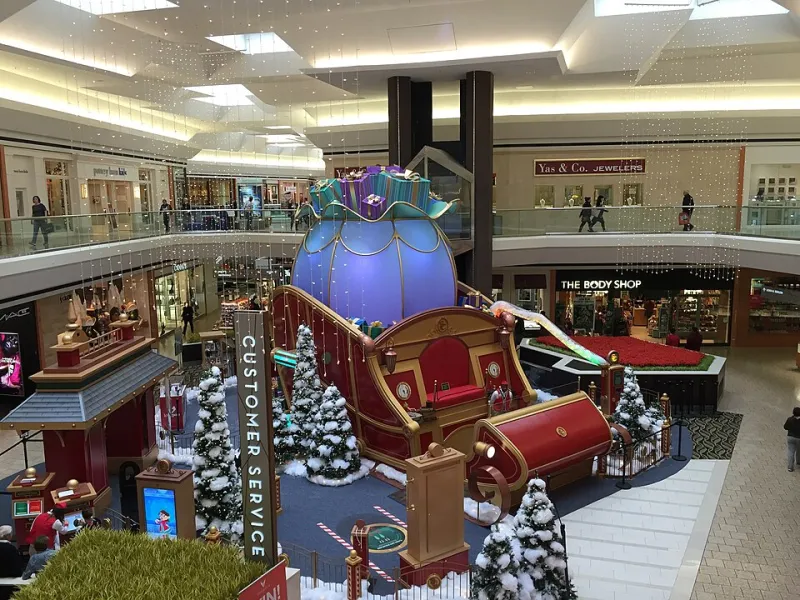
Photo: Famartin, CC BY-SA 4.0, via Wikimedia Commons
The hall smells of mince pies and damp anoraks. It is the second Saturday of December, the tombola has been picked over, and somebody’s nan is already carrying the raffle hamper out to the car. At the back, past the cake stall, there is a table with nothing on it but a hand-painted sign: “Take what you need. If you can, leave something.”
No prices. No float. No little tub of coins. It is the newest stall at the school Christmas fair, and it is the only one that isn’t really selling anything at all.
These give-away tables are turning up in school halls across the UK this winter. A tabletop of knitted gloves, jars of jam, second-hand books in decent nick, and small handwritten cards for anyone who might need a kind word in January. Pupils make them, sort them, staff them. The takings are, quite deliberately, nothing.
Which raises an awkward question for anyone who has ever stood behind a PTA trestle table with a clipboard: what is a Christmas fair actually for?
A village hall, a mountain of mittens
On the edge of the North York Moors, a two-form entry primary has held the same fair for thirty-odd years. Bric-a-brac, a bottle stall, a Santa who is usually a parent in a borrowed beard.
This December the deputy head, Ruth, cleared one table for what the children call the Warm Rail — coats, hats, scarves and gloves, washed and sorted, hung on a clothes rail with no label and no charge. Most of it came in from families who had outgrown it. A good deal of it was knitted by grandparents who could not be there on the day.
“The first year, I stood next to that rail feeling sick,” she says. “I thought, we’re going to raise less than last year and someone on the PTA will be furious with me.”
They did raise less. About £180 less. The roof fund survived, helped along by a small grant and a quiz night in February, and the rail was emptied by half past eleven.
What surprised Ruth was the queue at the front of the hall. Not children looking for something free — children bringing things. A boy of seven arrived with three pairs of gloves in a carrier bag and asked, very seriously, whether they had to be the same size.
The playground fair in the city
Two hundred miles south, a large primary in east Birmingham runs its fair on the playground itself, string lights over the bike racks, hot chocolate in paper cups that go soggy within minutes.
Here the give-away stall is a wall. Sheets of card and a box of pens, and one instruction: write something to somebody you’ve never met. The notes get pinned up, then taken down in the last week of term and delivered to a nearby care home and a winter warmth project that runs out of a church hall on the same road.
Year 6 teacher Amina says the first batch was, predictably, about football. The second batch was not.
“One said, ‘I hope your radiator works.’ That was it. That was the whole note,” she says. “We hadn’t taught that. We’d just given them a chair and a pen and told them who it was for.”
Amina is honest about her misgivings. She worries that a giving stall can slide into something performative — a photo opportunity, a lesson in being seen to be kind. So the school changed two things. The notes are not signed by class or marked by an adult. And every child who makes something for the stall spends a lesson finding out where it goes, who hands it out, and what happens in March when the Christmas fuss has died down.
Candlelight, and a short walk down the road
At a Catholic primary in Greater Manchester, the fair sits alongside the Nativity, which means the corridor between them is a gauntlet of tea towels and tea lights. The give-away table is set near the school’s small shrine, and it is quieter than the rest of the hall — deliberately so.
Children make jam-jar candles, decorate boxes, and write cards for residents at a care home four minutes’ walk away. A group delivers them in person during the last week of term, which is the part they talk about afterwards: the sitting down, the singing of one carol badly, the lady who asked them to come again.
The school’s chaplain, who has run the table for three years, puts the theology of it very plainly. “It’s not a fundraiser and it isn’t meant to be. It’s a small rehearsal for the rest of their lives.”
What the takings were
None of these schools scrapped the fair. The raffle still runs, the cakes still sell, the bottle stall still makes more money than anyone expects. The give-away table sits beside them, not instead of them, and that arrangement matters.
Some heads are refreshingly unsentimental about it. A fair is a fundraiser, and roofs are expensive. But there is something quietly instructive in a hall where children move between a stall that asks them to spend and a stall that asks them to think. Both are on the same afternoon. Both are staffed by the same nine-year-olds.
Ruth, back in the village, keeps one thing from that first year in her desk drawer: a card, written by a child, that says “thank you for the gloves, they are for my brother.” She has never worked out whether she was meant to read it.
“We spend a lot of time in schools measuring what children can do,” she says. “That table measured something else. I’m not sure I’ve got a name for it yet.”
If you are helping at a fair this December, it is worth asking the question the children have already started asking. What happens to the money? And what happens to the child who is asked to give it?