Bright Coats, Steady Hands: The Quiet Work of the UK School Crossing Patrol
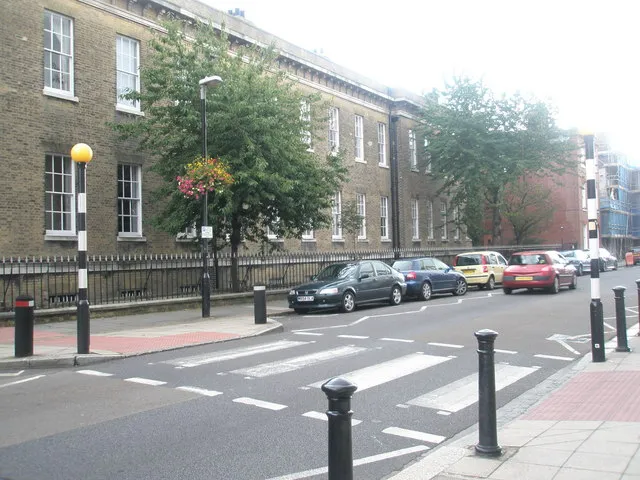
Photo: Basher Eyre, CC BY-SA 2.0, via Wikimedia Commons
At 8.35 on a wet Tuesday in November, the most reassuring sight at the end of many UK streets is a fluorescent coat and a raised lollipop sign. The traffic slows. A hand lifts. A small procession of children, hoods up and book bags swinging, crosses safely to the other side. Then the sign lowers, the cars move on, and the patrol officer is already saying good morning to the next family.
School crossing patrols are part of the furniture of British school life. They have been keeping watch since the middle of the last century, and in 2026 they remain one of the most human pieces of road safety we have. Councils fund and train them, schools work alongside them, and local communities quietly rely on them. Yet they are also easy to take for granted.
The first name you hear in the morning
A good patrol officer knows more than the Highway Code. They know that the twins in Year 2 are usually running late, that the boy in the red coat likes to press the button himself, and that the grandmother at number 14 has been poorly. They know which parent is new to the area and which child is nervous about starting school. They are, in a very practical sense, the first welcome of the school day.
That knowledge is built slowly. It comes from standing in the same spot, in all weathers, for months and years. It comes from remembering names and noticing absences. It comes from the kind of small talk that sounds ordinary but is actually community glue: a comment about the weather, a question about a football match, a reminder that a coat is needed tomorrow.
A job measured in small hellos
From a distance, the job looks straightforward: stop the traffic, walk across, repeat. In practice, it asks for sharp eyes, patience and a certain calm authority. Drivers are distracted. Cyclists appear from nowhere. Parents park where they should not. Children dart. The patrol officer has to hold all of that lightly, keeping order without making anyone feel told off.
It is also a role of quiet relationships. Some patrols are paid council employees; others are volunteers, depending on the local arrangement. Either way, they are often the person who notices when a child is upset, when a family is struggling or when the morning routine has gone badly wrong. They are not counsellors or teachers, but they are part of the pastoral landscape all the same.
There is nostalgia in the lollipop image, of course. Many adults remember their own patrol officer with affection: the wave, the joke, the firm reminder to look both ways. But the role is not stuck in the past. In 2026, patrols work alongside walking buses, 20mph zones, school street schemes and road safety lessons. They adapt as roads change, even if the sign itself still looks reassuringly familiar.
When the road changes, the patrol changes too
Not every school has a patrol, and not every patrol is easy to fill. Some councils have struggled with recruitment in recent years, and changes to road layouts or budgets can leave gaps. That is a challenge for communities, because a crossing patrol is not just a traffic measure. It is a daily point of contact between generations.
Where patrols are thriving, the reasons are often local: a school that champions the service, a council that keeps the post visible, a parent who writes a thank-you note, a retiree who decides to give two hours a week. The best recruitment appeals are less about civic duty in the abstract and more about belonging. You will know the families. You will be part of the morning. You will make the road safer simply by being there.
Say thank you, then maybe pick up a form
In the rush of the school run, it is easy to forget to say thank you. This term, why not make it deliberate? A wave, a quick word, a card from the class at Christmas or a note to the council road safety team can all make a difference. If you have ever thought about doing the job yourself, the next step is usually simple: contact your local council road safety team or the school office and ask about vacancies and training.
It is not a case of grabbing a sign and stepping into the road. Patrols are trained, checked and authorised, and that is exactly as it should be. But the need for kind, steady people is as real as ever. In a country where the school run can feel like a race, the lollipop patrol offers something different: a moment when traffic stops, a hand is offered and a child crosses safely. In 2026, that quiet work is still worth celebrating.