Ink, Patience and a Stamp: Why UK Pupils Are Putting Pen to Paper Again
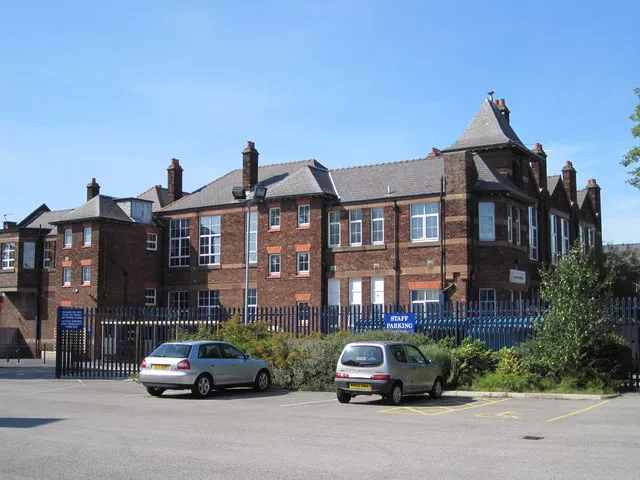
Photo: Sue Adair, CC BY-SA 2.0, via Wikimedia Commons
On a damp Tuesday morning in November, the windows of a Year 4 classroom in Salford are steamed up like a kettle. The pupils are not tapping at tablets. They are writing letters. Real ones, with a date at the top, a wobbly underline and a first-class stamp waiting by the door. The envelopes are addressed to a care home fifteen minutes away, and the children are taking the job very seriously indeed.
It is a scene repeated in schools across the UK this autumn. Pen-pal schemes with care homes, parish groups and neighbouring schools are finding a new audience in 2026, not because teachers are pining for the 1980s, but because something about ink and paper slows everyone down. In a school day sliced into fifteen-minute segments, a letter asks for a different kind of attention.
The quiet theatre of a real envelope
At St Aidan's Primary in Salford, the letter-writing sessions begin with a small ritual. Desks are cleared. Pencils are sharpened. The teacher writes the date on the board, and the children copy it, slightly crooked. Then comes the greeting, the opening question, the careful signing-off. No emojis. No deleting.
'We talk about the person who will hold the paper,' says Mrs Farrah, a Year 5 teacher. 'The children choose a greeting, ask a question, and sign off properly. They learn that a letter is a conversation with a pause in it.'
Alfie, aged nine, has written three letters to the same resident. 'You can't delete a letter,' he points out. 'So you think more.' He pauses, then adds: 'I like it when they write back and tell me about their dog.'
Care homes, parish halls and the shared table
Links with care homes have become the most visible form of the revival. In Cardiff, a primary school pairs Year 6 pupils with residents at a nearby home. The children write about school trips and football; the residents write about holidays in Pembrokeshire and the price of a loaf in 1962. A teaching assistant collects the letters each Friday and reads them aloud to the class before the replies go out.
Parish groups are another natural partner. In Norfolk, a village primary writes to the local church's lunch club. The children ask about favourite hymns and wartime Christmases. 'The residents write back by hand, often with a helper,' says the school's RE lead. 'One lady sends a pressed flower in every envelope. The children now press flowers in return. It has become its own little economy.'
Some schools pair older pupils with younger ones. At a secondary in Leeds, Year 10 students write to Year 3 classes at a feeder primary, answering questions about big school and offering advice. The letters are delivered by hand, which adds a certain ceremony. 'The little ones treat the envelopes like treasure,' says one Year 10 tutor. 'And the older ones suddenly realise they know things worth passing on.'
Letters to my future self
A second strand is the 'letters to my future self' project. Pupils write to themselves at eighteen, seal the envelope and leave it with the school. The letters are kept in a box, sometimes in the school safe, sometimes in a cupboard that smells faintly of PE kits.
At a primary in Bristol, Year 6 pupils write to their Year 7 selves in the summer term. They include a drawing of their bedroom, a list of favourite foods and one piece of advice. 'It is not about prediction,' says the class teacher. 'It is about noticing who you are now. The children take it seriously because they know nobody else will read it.'
In Leeds, a secondary school runs the project as part of transition week. The letters are returned in Year 11, just before GCSEs. 'Some students cry,' says the head of Year 11. 'Not because the letters are sad, but because they are so earnest. One boy had written: try to be braver in maths. He did not remember writing it.'
What teachers are noticing
Teachers report small changes that are hard to measure. Handwriting improves, slowly. Children edit more carefully because crossing out is visible. They ask better questions, perhaps because a letter demands a reply rather than a reaction.
'We see children thinking about the reader,' says Mrs Farrah. 'That is a skill that transfers to everything. You cannot write a letter to a stranger and be careless.'
Not every child loves it. Some find the blank page intimidating. Some complain about the price of stamps, or the wait for a reply. Teachers say the waiting is part of the point. 'We do a lot of waiting in education,' one head teacher says, 'but we rarely teach it. A letter teaches it without a worksheet.'
A slower kind of community
The appeal is not a rejection of technology. Most of these schools use tablets, email and online learning platforms every day. The handwritten letter is a small correction, not a revolution. It is a way of making community tangible. A stamp costs less than a bus fare. The look on a resident's face when they recognise the handwriting is not on a spreadsheet.
In Salford, the Year 4 class is finishing its letters. Alfie is drawing a small football at the bottom of his page. Mrs Farrah is checking envelopes. The care home will write back in a fortnight, perhaps with a pressed flower or a recipe for ginger cake. The children will wait. That, too, is part of the lesson.