The Ledger Under the Laminating Pouches: How One Primary Learned to Read Its Own Past
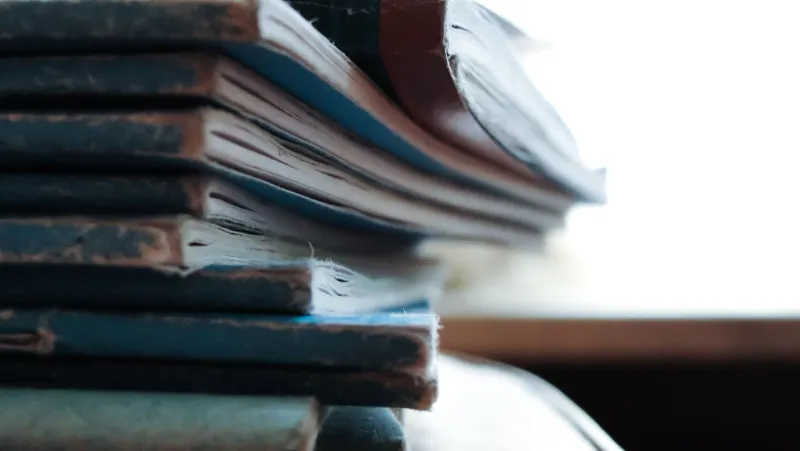
It began, as these things often do, with a hunt for glue sticks. The Year 5 teacher had sent two pupils to the stationery cupboard with strict instructions: blue lids, not red, and no coming back with glitter. What they found instead was a wooden ledger wedged behind the laminating pouches, its cover soft with dust and its pages filled with neat copperplate. Within twenty minutes, the headteacher was sitting on the corridor floor, reading out names of children who had started at the school in 1953.
That cupboard, it turned out, had been quietly keeping the school's story for decades. Behind the sugar paper and the half-empty boxes of board pens were class photographs, faded registers, letters from evacuees, a bundle of yellowed newspaper cuttings and a log book that recorded everything from burst pipes to a coronation party. Nobody had deliberately hidden it. It had simply been put somewhere safe, and then the safe place had become a stationery cupboard.
A Very Ordinary Time Capsule
The school is a Church of England primary in a village that has changed slowly but unmistakably. The old orchard behind the playground is now a housing estate. The main road was widened in the 1970s. The railway station closed long before most of the pupils were born. None of this is unusual. That is precisely the point. Schools like this one hold the everyday memory of a place — not the grand events that make it into history books, but the small, repeated things that make a community feel like itself.
The discovery set off a term-long project that nobody had planned for. A small group of Key Stage 2 pupils became unofficial archivists, meeting on Wednesday afternoons with the headteacher and a retired teacher who had offered to help. They learned how to handle old paper with clean hands. They practised reading cursive. They worked out that the initials in the margin of one register stood for a dinner lady called Mrs. Pritchard, who had worked at the school for twenty-two years and was remembered by several neighbours for her rice pudding.
Interviews, Biscuits and Careful Listening
The pupils did what historians do: they asked questions. They invited former staff and local residents into school for tea and biscuits, and they recorded conversations with permission. One former pupil, now in her eighties, brought a photograph of the school choir from 1958 and pointed out her own mother in the back row. A retired caretaker explained why there used to be a gate at the side of the playground — a small detail that helped the children understand how the village had once been laid out.
The interviews were not always easy. The children learned to wait through long pauses. They learned that memory is not a neat list of facts, but a tangle of feelings and half-remembered names. They also learned about consent, and why it matters to ask before you write someone's story down. One pupil said afterwards that it felt like being trusted with something important. That is not a bad definition of heritage work.
The Exhibition in the Hall
The project ended with a small exhibition in the school hall. There was no museum budget. Display boards were borrowed from the local library. Photographs were scanned and printed on ordinary paper. The labels were handwritten by the pupils, some with wobbly underlining. A table near the door held the original log book under a clear plastic sheet, open at a page describing a snowy winter when the boiler failed and lessons were held in coats.
The exhibition was open for two afternoons and one evening. Grandparents came. Neighbours came. A former headteacher drove forty minutes to see it. The children stood by their favourite objects and explained them, over and over, with the patience of people who had genuinely become experts. What struck the staff most was how ordinary it all felt. No ribbon was cut. No one gave a speech. There was squash and a plate of biscuits, and a lot of people leaning over old photographs trying to find themselves.
Why It Matters
Schools are often asked to prove their worth in data. This cupboard did not contain a single piece of evidence that would move a league table. What it contained was something quieter: proof that a school is not just a building where lessons happen, but a place where generations overlap. The log books recorded the weather, the visitors, the small disasters and the celebrations. The photographs recorded faces that had grown up and moved away and sent their own children back through the same gate.
There is a temptation to think heritage belongs to stately homes and cathedral archives. But most of us live our lives in ordinary places, and those places need keeping too. A school archive does not need a climate-controlled room or a curator with a degree. It needs a few people who care, a scanner, a box of acid-free folders if you can stretch to it, and the patience to listen. It also needs someone to remember where the cupboard is.
At Mary Ward Loreto, we write often about school stories and quiet faith. This is both. It is the faith of ordinary continuity — the belief that the small things are worth keeping, and that children can be trusted to help keep them. The pupils at this primary now have a new ritual. Once a term, they add something to the archive: a photograph, a newsletter, a note about a funny thing that happened in the playground. The cupboard is no longer neglected. It has a label on the door, written in careful handwriting, and everyone knows what it is for.
It is still where the glue sticks live. But now it is also where the school remembers.