A Crib in the Window: The Nativity Set That Spends December in the Village
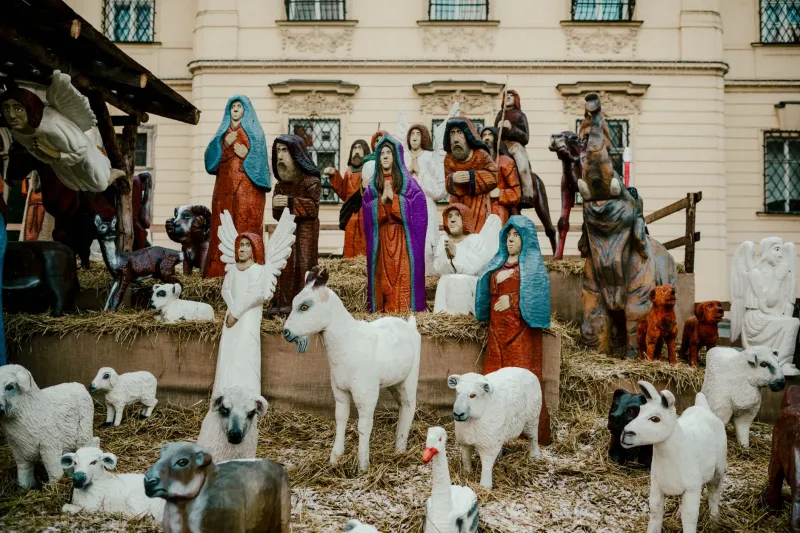
The stable is empty for most of December. That is not an oversight. At a primary school in a market town in the north of England, the figures from the school nativity set are packed into a padded box and sent out into the village, one host at a time, like very small and very well-behaved guests.
By the time pupils break up for Christmas in 2026, Mary and Joseph will have spent a week in the window of the greengrocer. The shepherds will have stood on a shelf in the care home lounge. The angel — slightly chipped at one wing, and much loved for it — will have done a shift at the library. The baby Jesus arrives last, as is only right, carried by a Year 6 pupil in a shoebox lined with tissue paper.
The stable goes out on loan
The idea is simple enough to fit on one side of A4. The school lends its crib figures to local shops, cafes, care homes and community spaces through Advent. Each host keeps the figures for a few days, displays them somewhere visible, and writes a short note in a travelling diary that goes with them.
The diary is the heart of it. It is not a visitor book or a feedback form. It is a plain exercise book with a fabric cover, and hosts write whatever they like: a memory of a childhood nativity, a line about a grandparent, a note from a shopkeeper about the child who stopped to point at the donkey. One care home resident drew a picture of the stable because she could not find the words. Another host Sellotaped in a receipt for mince pies and wrote: 'The figures seemed to approve.'
Nothing is locked away. Nothing is behind glass. That is the point. The school has decided that a nativity set is for handling gently, not for guarding.
A diary instead of a display case
The project began as a small answer to a common problem: how do you keep the Christmas story present in a school without turning it into a performance? The nativity play is lovely, but it is also a whirlwind of tea towels and tinsel. The travelling crib offers something quieter. It lets the story unroll slowly, across the village, at the pace of everyday life.
For pupils, the diary is a way into faith stories that does not demand certainty. They read the notes in assembly — a few lines each morning — and hear how a shopkeeper remembers her mother's crib, or how a care home resident used to place the figures in the window every Christmas Eve. The story of Bethlehem sits alongside the story of the village. Neither is asked to shout.
Teachers have found that the questions come naturally. Why did Mary and Joseph travel? Why was there no room? What does it mean to make room for someone? The figures give children something to hold on to while they think. A donkey in a shoebox is less intimidating than a doctrine.
Why pupils see more than figures
The school is careful not to make the project a competition. There is no prize for the best window. Hosts are not asked to decorate or to tweet. They are simply asked to keep the figures safe and to write a line or two. That lack of fuss seems to be why it works. Shops that would never enter a Christmas window contest happily put the crib next to the till. A care home that already has a full activities calendar makes room for something that asks nothing of anyone except a little attention.
It also builds a different kind of trust between school and village. Parents and staff already know the school gate; this project takes the school's life into the high street. Children see their school in the butcher's window and the library display. Hosts see the school as a neighbour rather than an institution. The relationship is small and ordinary, which is often the best kind.
The practical bits: how to make it work
Other schools thinking of trying it do not need a budget or a committee. A few practical steps make the difference.
- Use figures that can bear a little handling. If the school set is fragile or precious, buy a simple wooden or resin set for the project and keep the good one for the hall.
- Line a sturdy box with bubble wrap and include a checklist: figures, diary, pen, a short note explaining the project, and a contact number for the school office.
- Recruit hosts in person where possible. A word at the post office counter or the care home reception is worth ten emails.
- Keep the loan short — three to five days is plenty. Long enough to settle, short enough to keep the momentum.
- Read the diary in assembly, but do not edit it into a polished script. The rough notes are the point.
- Bring the figures back for the last day of term and display them in school with the diary open. Pupils can see the whole journey in one place.
What comes back after Christmas
The figures come home a little worn, which is as it should be. The diary comes home full. One school found a pressed holly leaf between the pages. Another found a note from a shopkeeper who had not been inside a church for years but had stood the crib in his window and remembered the smell of candle wax.
The travelling manger does not solve anything grand. It will not fill a church or fix a budget. But it does something modest and useful: it lets a school share its Christmas story without insisting on a stage. It gives pupils a gentle way into faith, and it gives a village a reason to look in a shop window and see something other than a price tag.
If your school has a nativity set sitting in a cupboard for eleven months of the year, this might be the year to let it travel. The diary is waiting.