No Register, No Bell: The Unhurried Day of a School Chaplain
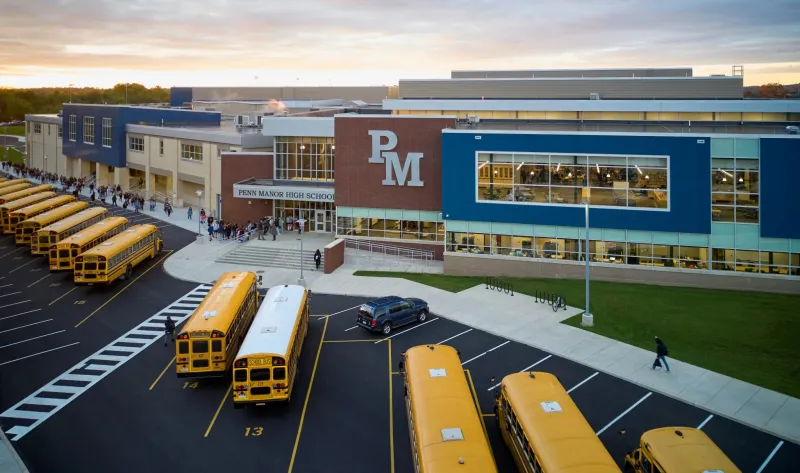
Photo: school chaplain sitting with students quiet room candles conversation UK secondary school pastoral, via www.pennmanor.net
The chaplain's day begins before the gates open. There is a hall to check, a candle to light or not light depending on the school's policy, and a recycling bin's worth of last week's notices to clear from a table that will be covered again by lunchtime.
There is no register to take. Nobody marks the chaplain's attendance. And that, in a nutshell, is both the freedom and the difficulty of the role.
A Role With No Timetable
School chaplaincy in the UK is a broad church — literally and otherwise. Some chaplains are ordained, some are lay, some are employed by the school, some are seconded by a local church or a religious order, and some are volunteers giving two days a week. They serve in church schools and community schools, in secondaries of two thousand pupils and in primaries with four classes and a shared kitchen.
What they share is a job description written mostly in verbs that do not appear on a timetable: listen, notice, accompany, hold.
"People assume I spend my day doing assemblies," says one secondary chaplain in the north of England. "I do about two a week. The rest is corridors. The rest is being a person somebody can find."
The First Hour Is the Quietest
The hour before lessons is when the ones who need it most tend to arrive early. A Year 9 pupil who does not want to walk into the yard alone. A parent who has been awake since four and wants to say something out loud in a room with a door. A member of the catering team whose mother is in hospital.
Chaplains describe this hour as sacred in the least sentimental sense of the word: it is simply protected. No meetings are booked. The kettle is on. The door is ajar in a way that signals, without a sign, that a conversation could start if somebody wanted one.
Toast, Squash and the Lunchtime Drop-In
At noon, the room changes character entirely. The drop-in opens. There is toast, sometimes a toaster that trips the fuse, squash, occasionally biscuits of uncertain vintage. Between eight and forty pupils might come through depending on the day, the weather and what is happening in the canteen.
Some come to talk. Many come to sit. A few come for the toaster and stay for the company, which is precisely the point.
The chaplains we spoke to were emphatic that this is not a counselling service and they are careful not to pretend otherwise. They receive safeguarding training, they know the referral routes, and they will walk a child to the pastoral team themselves if need be. What they offer instead is something upstream of counselling: unhurried attention, without an agenda and often without a fix.
"I can't make the thing at home better," one chaplain says. "But I can make sure a child isn't carrying it alone between nine and three."
When the News Is Bad
The hardest weeks in any school are the ones nobody plans for. A bereavement in the community. A serious accident. A family in crisis that becomes known through the office rather than the news.
This is where chaplaincy earns its keep. A chaplain may sit with a headteacher at seven in the morning to help draft what staff will be told and how. They may hold a room open at break so that pupils who need to cry can do it somewhere that is not a toilet cubicle. They may take the assembly that nobody feels able to lead.
And they do it without needing the spotlight. In most schools, the chaplain's most valuable contribution on a bad day is invisible to anyone outside the building.
A Presence for Everyone
Perhaps the most misunderstood part of the role is who it is for.
School chaplains serve pupils of every faith and none. A good chaplain learns quickly that a Muslim pupil might want to talk about Ramadan, that a pupil from a secular family might ask the biggest questions in the school, and that a Year 11 revising for exams needs the same quiet room as anyone else.
"I'm not there to make anybody religious," one chaplain puts it. "I'm there because the school believes that children are more than their progress measures. That's a belief. It happens to be a religious one for me."
It is a tradition with deep roots in this country — and in the Loreto story, where Mary Ward's insistence that young people be taught to 'seek truth and do justice' was never only about lessons. Chaplaincy carries something of that inheritance into a very different century: the conviction that a school is a community before it is an institution.
The Staff Room, Too
Ask a chaplain who their most frequent visitors are and the answer may surprise you. Often, it is the adults.
Teachers and support staff carry a great deal quietly. A chaplain is one of the very few people in a school with no line management responsibility over them, no performance data to chase, no reason to be in the staff room other than to be there. That neutrality makes space for conversations that would otherwise not happen.
Why It Matters in 2026
Schools in 2026 are asked to do more than ever with attention that is stretched thinner than ever. Attendance, mental health, behaviour, safeguarding, exam results — every one of these is a genuine priority, and every one of them competes for the same hours.
Chaplains do not solve any of them on a spreadsheet. What they do is softer and harder to measure: they make a building feel like a place where somebody is glad you turned up.
That is not a small thing at seventeen past eight on a wet Tuesday in November. It may, in fact, be the whole thing.