Free From, Not Bound By: The Mary Ward Question UK Schools Are Still Answering in 2026
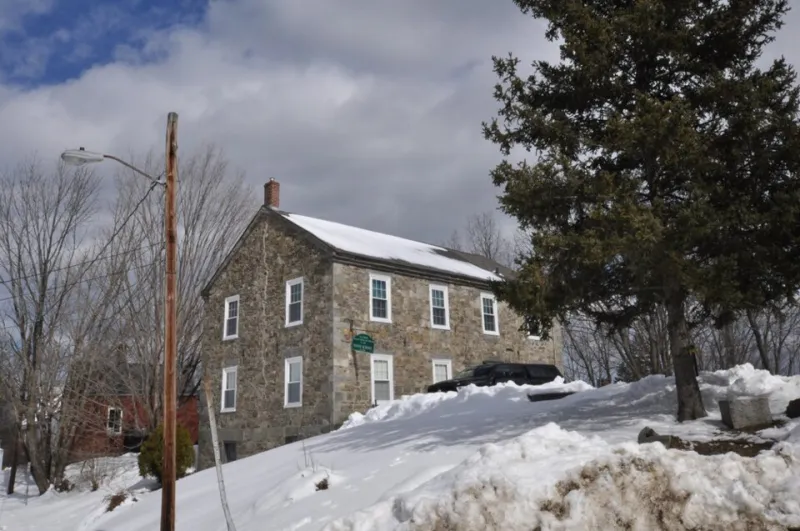
Photo: User:Magicpiano, CC BY-SA 4.0, via Wikimedia Commons
Every school has a founding story, and most of them are half-forgotten by the time the new Year 7 intake arrives with their bags too big for their shoulders. Loreto schools have a better one than most. It begins in Yorkshire, in the 1580s, with a girl who would not stay put.
Mary Ward was born in 1585 into a recusant Catholic family in a country where her faith was illegal, fined and quietly dangerous. She wanted to be a nun. The Church, politely and then firmly, suggested she might like a cloister. She declined. What she wanted was an unenclosed order — women living in the middle of things, running schools for girls, teaching rich and poor together, answerable to the need in front of them rather than the conventions behind them.
She walked to Rome to argue her case, on foot, across the Alps. She was heard, delayed, misunderstood and eventually condemned. In 1631 her institute was suppressed by papal bull; she was briefly imprisoned in Munich and described in one document as a “gossiping traitress.” She died near York in 1645, and it took the best part of three centuries for the Church to say plainly that she had been right.
Her best-known line is that women in time to come would do much. Less quoted, and to my mind more useful, is the shorthand her followers have carried ever since: that they were to be free from, not bound by. Free from the cushions of privilege that make you useless to anyone else. Free from the respectable fear of what the neighbours will say. Bound by nothing except the work itself.
The question in the staffroom
I have been turning that phrase over all autumn, because 2026 has given schools plenty to be bound by. Attendance, budgets, the price of a coach, the quiet arithmetic of the school day. Staffrooms are full of people doing heroic sums.
But Mary Ward’s question is not really a question about money. It is a question about who is in the room, and why, and who has quietly stopped coming.
A comprehensive in the North East
Take a large 11–18 academy in a post-industrial town, the sort of school where 40 per cent of pupils are on free school meals and the minibus has done 190,000 miles. Nobody there is quoting a seventeenth-century Englishwoman. But the leadership team has spent two years auditing what they call the invisible exclusions: the £4 revision guide, the mufti day, the trip that is technically optional, the sports kit that is not quite the right shade, the fact that the only bus home leaves at ten past four.
Every one of those is small. Stacked up, they decide who belongs. A school can be comprehensive on paper and quietly selective in the corridor.
When the school scrapped charges for the two residentials and started lending kit from a cupboard by the PE office, attendance on those trips shifted by a third. Not because the families hadn’t wanted to go. Because the sheet on the wall had told them, without anyone meaning it, that this particular thing was not for them.
That is what being bound by something looks like in 2026. It rarely announces itself.
A Loreto school, where the name is a promise
The Loreto schools I have visited — and there are plenty across England, from Altrincham to St Albans to Manchester — tend to be described by outsiders as traditional. They are. But the tradition is stranger than the uniform suggests.
In one, the first thing the head showed me was not the chapel or the exam results board but the admissions paperwork, and the work the school does with two local primaries whose pupils rarely apply. She was blunt about it: “We can put her name on the wall and sing about it, or we can go and meet her family and sort out the bus fare and the blazer. Those are different activities.”
Mary Ward taught the daughters of nobility alongside girls who had nothing, in the same room, in the same century that decided such mixing was indecent. She did not do it by pretending the difference did not exist. She did it by making sure the difference did not decide the seating plan.
Four hundred years on, a school carrying her name is making a claim about who it educates. That claim is easier to make in a prospectus than in a January staff meeting about a family who cannot manage the coach to the cathedral.
The classroom without a bell
Then there is the third place, which is not a school at all. A church hall on the edge of a Midlands town, Tuesday and Thursday evenings: adult literacy, conversational English, a kettle, a box of biros, and a table of women in their forties and fifties who left school at fifteen with a certificate and nothing much else.
The woman who runs it is a retired primary teacher called Doreen. She has been doing this for nine years, unpaid, and she is entirely uninterested in my questions about policy.
“Don’t call it giving back,” she said, quite sharply, when I tried. “It’s not giving back. It’s just the second half of the job no one finished first time round.”
That seems to me the most Mary Ward sentence I have heard all year. Her schools were not an act of charity. They were a correction — an argument that the education on offer was incomplete, and that someone was going to have to finish it.
What a classroom owes its neighbourhood
So here is my argument, offered humbly, in a year when schools are being asked to do more with less and to be everything to everyone.
A classroom owes its neighbourhood three things. It owes it honesty about who gets in and who does not — published, uncomfortable, audited. It owes it the small courtesies that cost almost nothing: a bus that runs, a cupboard of spare kit, a trip without a price tag attached to the envelope. And it owes it the plain admission that an education which only works for the children who were already fine is not really an education at all.
None of that is glamorous. Mary Ward herself was not glamorous. She was a nuisance to powerful men for four decades, and she spent a good chunk of her life being told she had got the wrong end of the stick.
Her question does not belong to the schools that bear her name. It belongs to every playground in the country. Who is missing, and what are we going to do about it before the bell goes?