Names by the Gate: How UK Schools Are Keeping Remembrance Local in 2026
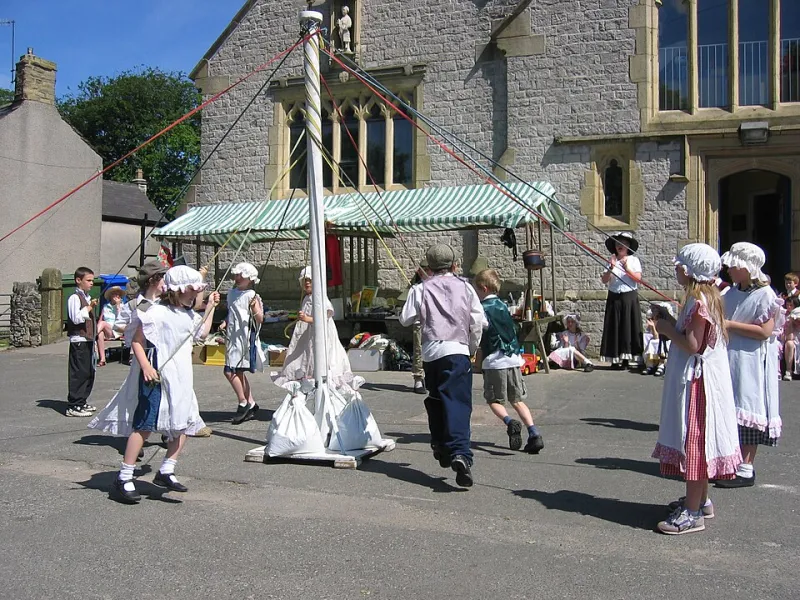
Photo: Peter Turner , CC BY-SA 2.0, via Wikimedia Commons
On Sunday 8 November 2026, the UK will pause again. Church bells will ring, wreaths will be laid, and in school halls from Cornwall to Caithness pupils will stand for the two-minute silence. But in many places, the silence is only the beginning.
Across the country, school communities are asking a warmer and more practical question: how do we remember not just as an event, but as a habit? The answers are often local, modest and deeply moving. They involve names on a memorial, a letter written by hand, a veteran invited to listen as much as to speak. They also sit comfortably within a faith-inspired view of memory, one that sees peace as something built in small, daily choices.
Beyond the two-minute silence
A common starting point is the nearest war memorial. It might stand at the end of a high street, beside a village green or in the corner of a churchyard. Classes have begun photographing these memorials, copying the names and then doing the slow work of finding out who those people were. Not every pupil becomes a historian overnight. That is not the point. The point is that a name stops being a line of stone and becomes a person who once queued at the same bakery, walked the same lane or sat in the same pew.
Some schools pair older pupils with younger ones for this work. The older children handle archival searches and local newspaper records; the younger ones draw portraits, write captions or make a class book. The result is rarely polished, and that is part of its charm. A display board with slightly wonky handwriting can say more than a printed poster. It says: we made this, and we mean it.
Letters to people we never met
Another approach that has taken root is the letter. Pupils choose a name from the memorial or from their own family tree and write to that person. The letters are not sent. They are displayed, read aloud in class or kept in a folder for the following year. The questions pupils ask are often disarmingly simple: What did you miss most? What did you eat on a Sunday? Were you frightened? What would you like us to know?
Teachers report that the exercise changes the atmosphere in a room. Remembrance can sometimes feel abstract, all dates and distant maps. A letter makes it personal. It also gives pupils permission to be curious rather than solemn. One Year 6 class in the north of England reportedly ended a letter with the line, 'We have a dog now. You would have liked him.' That is not trivial. It is the sound of a child placing themselves in a longer story.
For families, this is easy to borrow. A half-term project could involve a single letter to a great-grandparent, a neighbour who served or a name from the local memorial. It need not be grand. A sheet of paper and a quiet twenty minutes can do a great deal.
Inviting veterans in, with listening ears
Assemblies with veterans remain a fixture in many schools, but the best ones are changing shape. Rather than a formal speech followed by polite applause, some schools are choosing conversation. Pupils prepare questions in advance: not only about battles and dates, but about food, friendships, weather, letters from home and what helped them keep going. Teachers are careful to keep the tone gentle. The aim is not spectacle. It is understanding.
This approach can be especially powerful in primary schools, where children often ask the most direct questions. Why did you join up? Were you scared? Did you have a best friend? The veteran is not expected to have tidy answers. The honesty is the lesson. Pupils learn that courage is not the absence of fear, and that peace is not a slogan but a fragile, human thing.
What families and local groups can borrow
None of this requires a large budget. A few simple ideas are worth sharing:
- Adopt a name from a local memorial and research it as a family or street group.
- Walk to the memorial together and read the names aloud, slowly.
- Write a peace promise for the week ahead, such as including someone at lunch or checking on a neighbour.
- Ask a local historian, church member or Royal British Legion representative to help with a small display.
- Invite an older neighbour to tell one story, not a whole life history.
The last point matters. Remembrance can become heavy when we expect it to carry everything. Small, specific acts of attention are often more sustaining. A single story, told over a cup of tea, can stay with a child for years.
Peace as a daily practice
The Loreto tradition has long emphasised care for place and people, and Mary Ward's encouragement to act with freedom, justice and sincerity still speaks to school communities today. Remembrance Sunday gives that tradition a particular focus. It asks us to honour the past and to notice where peace is needed now: in the corridor, in the playground, online, in the way we speak about people who are different from us.
That is not a political point. It is a human and, for many, a spiritual one. The two-minute silence is a gift because it stops us. But the days after it are where memory becomes character. A school that researches names, writes letters and listens to veterans is not just marking a date. It is learning how to belong to a place and to one another.
When the last post fades on 8 November 2026, the task will still be there. Keep the names by the gate. Keep asking questions. Keep making room for quiet, honest peace.